


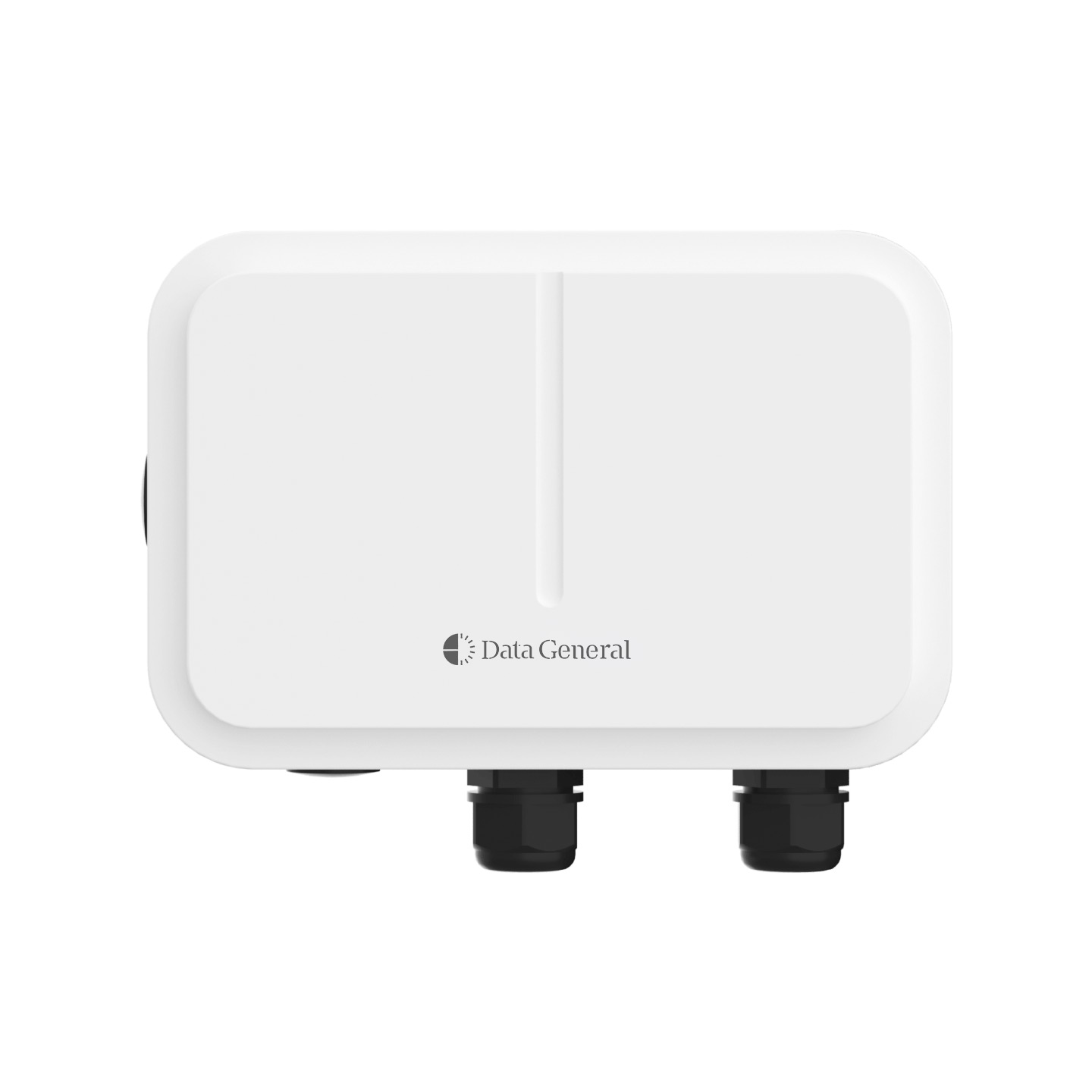
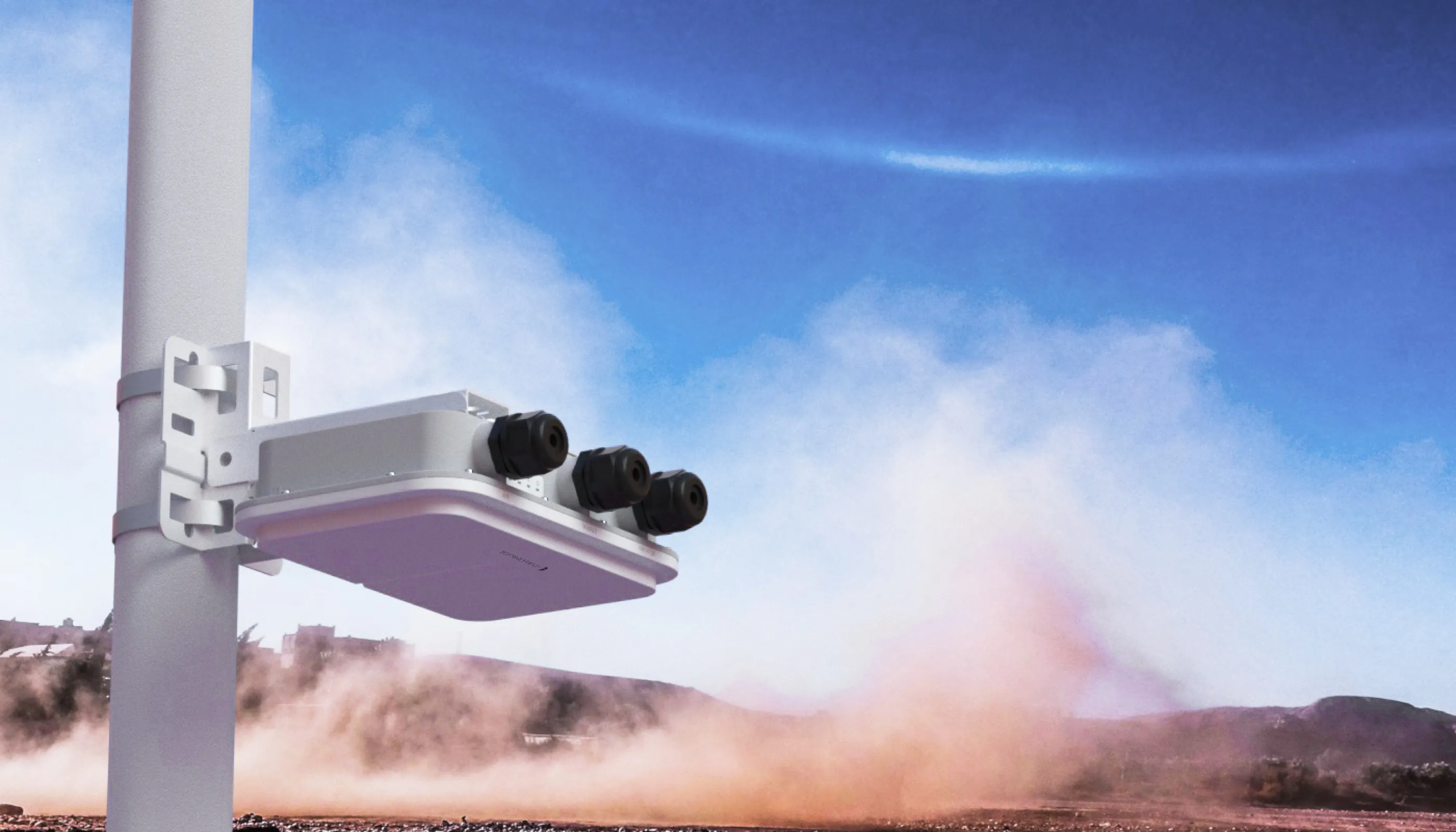
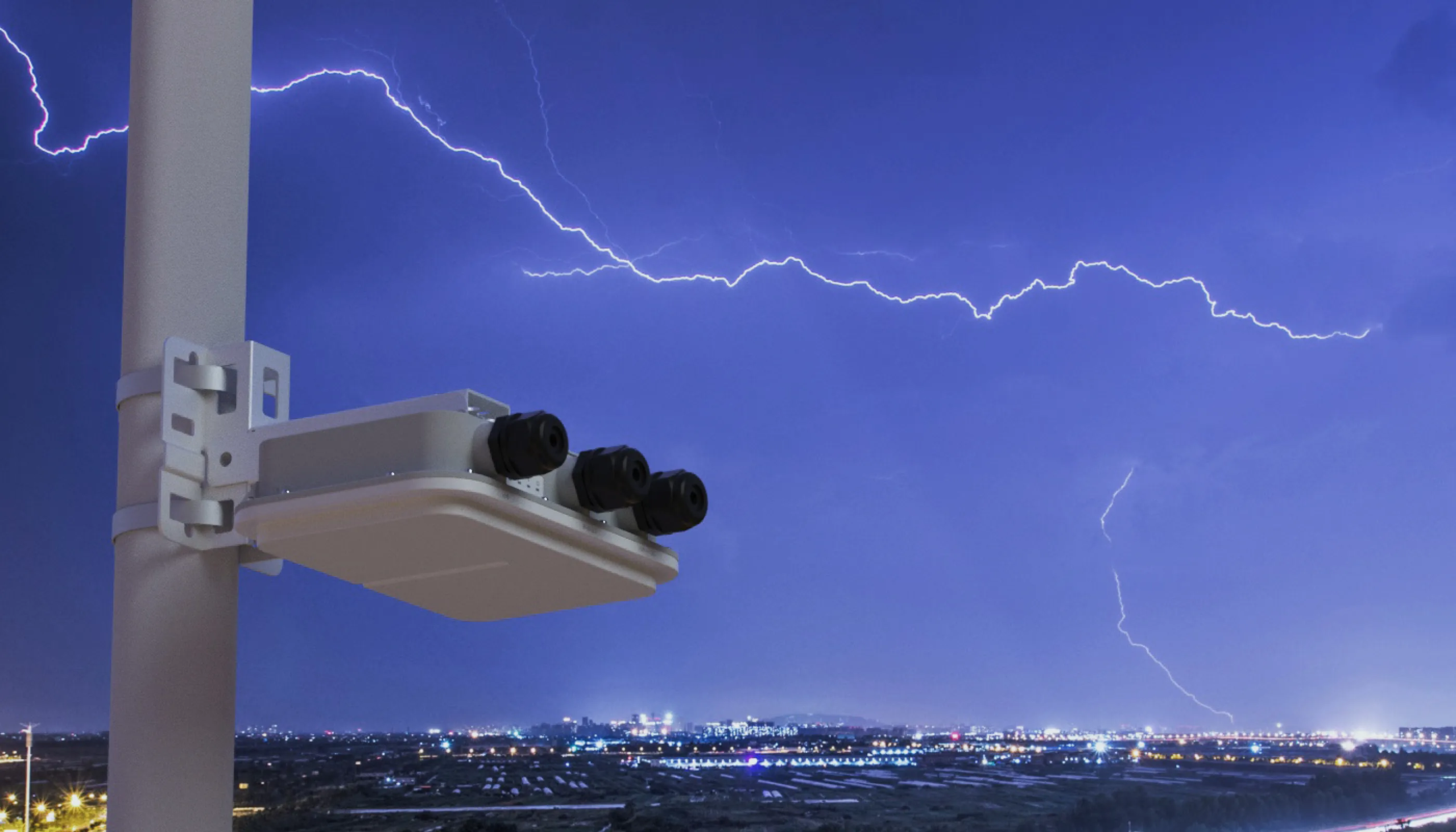






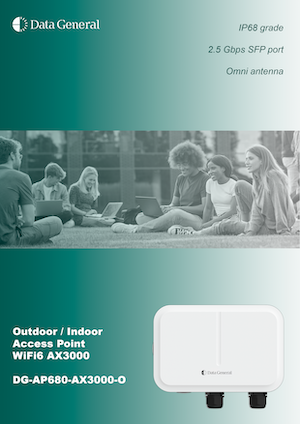
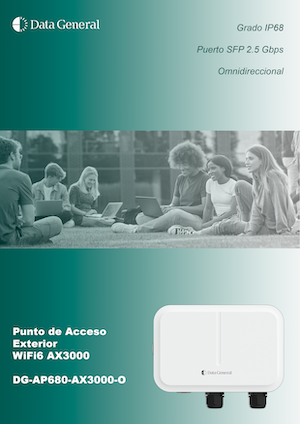
Outdoor WiFi 6 AX3000 access point with IP67 protection and integrated omnidirectional antenna. Ideal for uniform 360° coverage in hospitality, campuses, terraces, and open outdoor areas.
180 in stock
DG-AP680-AX3000-O WiFi 6 Outdoor Access Point – IP67 with Omnidirectional Coverage
The DG-AP680-AX3000-O is a professional-grade WiFi 6 (802.11ax) outdoor access point from Data General, designed to provide uniform 360° wireless coverage in outdoor and semi-outdoor environments. Built on a dual-band, dual-radio 2×2 MIMO architecture, it delivers AX3000-class performance, ensuring stable, efficient, and high-speed connectivity for multiple simultaneous users.
This model stands out thanks to its integrated omnidirectional antenna, which enables consistent signal distribution in all directions. This makes the DG-AP680-AX3000-O ideal for open areas where even coverage is required, eliminating blind spots and simplifying network planning compared to directional solutions.
Engineered for durability, the access point features an IP67-rated enclosure, offering complete protection against dust, rain, humidity, and harsh weather conditions. This rugged design ensures long-term reliability in permanent outdoor installations, even in challenging environmental conditions.
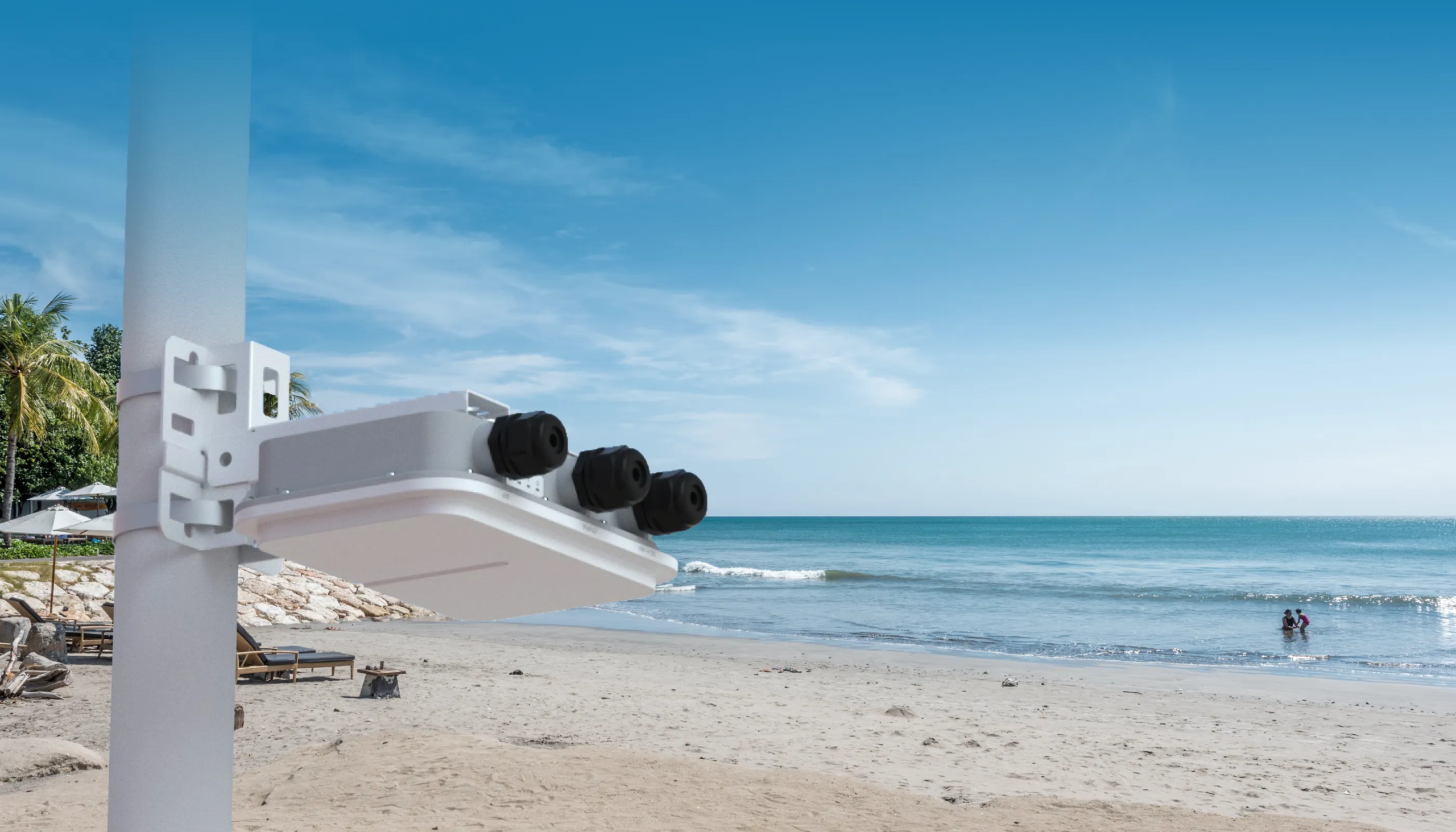
Powered by WiFi 6 technology, the DG-AP680-AX3000-O delivers improved spectral efficiency, lower latency, and better performance in environments with multiple connected devices. It is particularly well suited for gardens, terraces, hotel outdoor areas, swimming pool zones, campsites, courtyards, parking areas, campuses, and hospitality venues, where wide and uniform outdoor coverage is essential.
The DG-AP680-AX3000-O combines outdoor-grade robustness, omnidirectional coverage, and modern WiFi 6 performance, making it a reliable and future-ready solution for system integrators and professional installers seeking efficient outdoor wireless connectivity.
| Hardware Specifications | |
|---|---|
| 802.11n | Four spatial streams |
| · Radio 1 – 2.4 GHz: 2×2 MIMO, two spatial streams | |
| · Radio 2 – 5 GHz: 2×2 MIMO, two spatial streams | |
| Channels: | |
| · Radio 1 – 2.4 GHz: 20 MHz and 40 MHz | |
| · Radio 2 – 5 GHz: 20 MHz and 40 MHz | |
| Combined peak data rate: 600Mbps | |
| · Radio 1 – 2.4 GHz: 6.5 Mbps to 300 Mbps (MCS0 to MCS15 ) | |
| · Radio 2 – 5 GHz: 6.5 Mbps to 300 Mbps (MCS0 to MCS15) | |
| Radio technologies: Orthogonal Frequency-Division Multiplexing (OFDM) | |
| Modulation types: BPSK, QPSK, 16-QAM, 64-QAM, 256-QAM | |
| Packet aggregation: | |
| · Aggregate MAC Protocol Data Unit (A-MPDU) | |
| · Aggregate MAC Service Data Unit (A-MSDU) | |
| Dynamic Frequency Selection (DFS) | |
| Cyclic Delay/Shift Diversity (CDD/CSD) | |
| Maximum Ratio Combining (MRC) | |
| Space-Time Block Coding (STBC) | |
| Low-Density Parity Check (LDPC) | |
| Transmit beam-forming (TxBF) | |
| 802.11ac | Two spatial streams |
| · Radio 2 – 5 GHz: 2×2 MIMO, two spatial streams | |
| Channels: | |
| · Radio 2 – 5 GHz: 20 MHz, 40 MHz, 80 MHz, and 160 MHz | |
| Combined peak data rate: 1.733 Gbps | |
| · Radio 2 – 5 GHz: 6.5 Mbps to 1.733 Gbps (MCS0 to MCS9) | |
| Radio technologies: Orthogonal Frequency-Division Multiplexing (OFDM) | |
| Modulation types: BPSK, QPSK, 16-QAM, 64-QAM, 256-QAM, 1024-QAM | |
| Packet aggregation: | |
| · Aggregate MAC Protocol Data Unit (A-MPDU) | |
| · Aggregate MAC Service Data Unit (A-MSDU) | |
| Dynamic Frequency Selection (DFS) | |
| Cyclic Delay/Shift Diversity (CDD/CSD) | |
| Maximum Ratio Combining (MRC) | |
| Space-Time Block Coding (STBC) | |
| Low-Density Parity Check (LDPC) | |
| Transmit beam-forming (TxBF) | |
| 802.11ax | Four spatial streams |
| · Radio 1 – 2.4 GHz: 2×2 uplink/downlink MU-MIMO, two spatial streams | |
| · Radio 2 – 5 GHz: 2×2 uplink/downlink MU-MIMO, two spatial streams | |
| Channels: | |
| · Radio 1 – 2.4 GHz: 20 MHz and 40 MHz | |
| · Radio 2 – 5 GHz: 20 MHz, 40 MHz, 80 MHz, and 160 MHz | |
| Combined peak data rate: 2.976 Gbps | |
| · Radio 1 – 2.4 GHz: 8.6 Mbps to 0.574 Gbps (MCS0 to MCS11) | |
| · Radio 2 – 5 GHz: 8.6 Mbps to 2.402 Gbps (MCS0 to MCS11) | |
| Radio technologies: uplink/downlink Orthogonal Frequency-Division Multiple Access (OFDMA) | |
| Modulation types: BPSK, QPSK, 16-QAM, 64-QAM, 256-QAM, 1024-QAM | |
| Packet aggregation: | |
| · Aggregate MAC Protocol Data Unit (A-MPDU) | |
| · Aggregate MAC Service Data Unit (A-MSDU) | |
| Dynamic Frequency Selection (DFS) | |
| Cyclic Delay/Shift Diversity (CDD/CSD) | |
| Maximum Ratio Combining (MRC) | |
| Space-Time Block Coding (STBC) | |
| Low-Density Parity Check (LDPC) | |
| Transmit beam-forming (TxBF) | |
| WPA3 | |
| Antenna | Wi-Fi |
| · 2.4 GHz: two built-in omnidirectional antennas, the max. antenna gain is 4 dBi. | |
| · 5 GHz: two built-in omnidirectional antennas, the max. antenna gain is 6 dBi. | |
| Bluetooth | |
| · One integrated vertically polarized omnidirectional antenna, the max. antenna gain is 5 dBi. | |
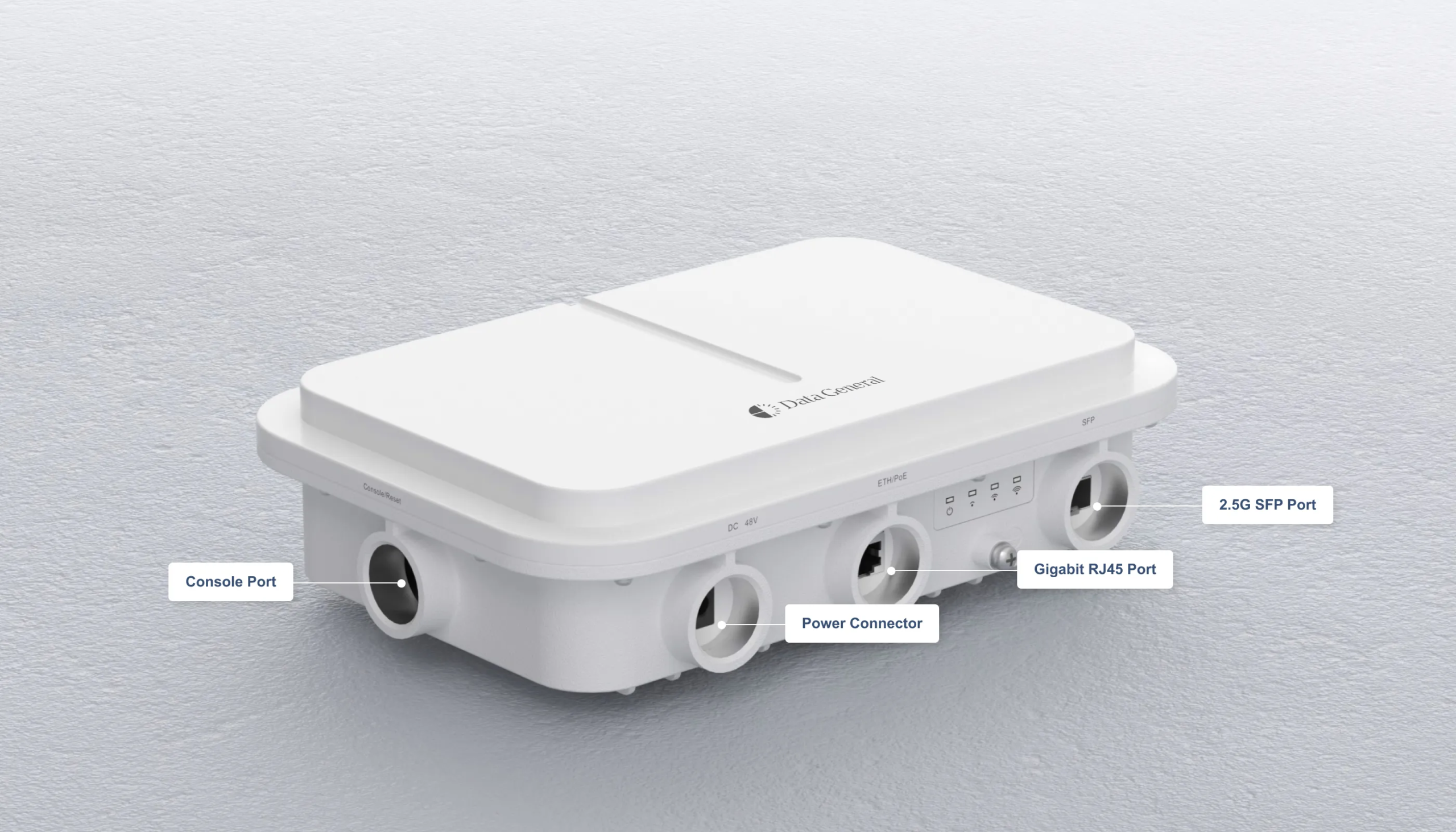
| Port | 1 x 100/1000Base-T RJ45 Ethernet port with auto-negotiation |
| 1 x 2.5GE SFP port | |
| 1 x RJ45 console port (serial console port) | |
| 1 x Bluetooth 5.0 | |
| Status LED | 1 x multi-color system status LED |
| · AP power-on status | |
| · Software initialization status and upgrade status | |
| · Uplink service interface status | |
| · Wireless user online status | |
| · CAPWAP tunnel timeout | |
| · Specific AP locating | |
| Three single-color signal strength LEDs: | |
| · Whether bridging is enabled | |
| · Whether bridging is successful | |
| · Wireless signal strength after successful bridging | |
| Button | 1 x Reset button |
| · Press the button for shorter than 2 seconds. Then the device restarts. | |
| ● Press the button for longer than 5 seconds. Then the device restores to factory settings. | |
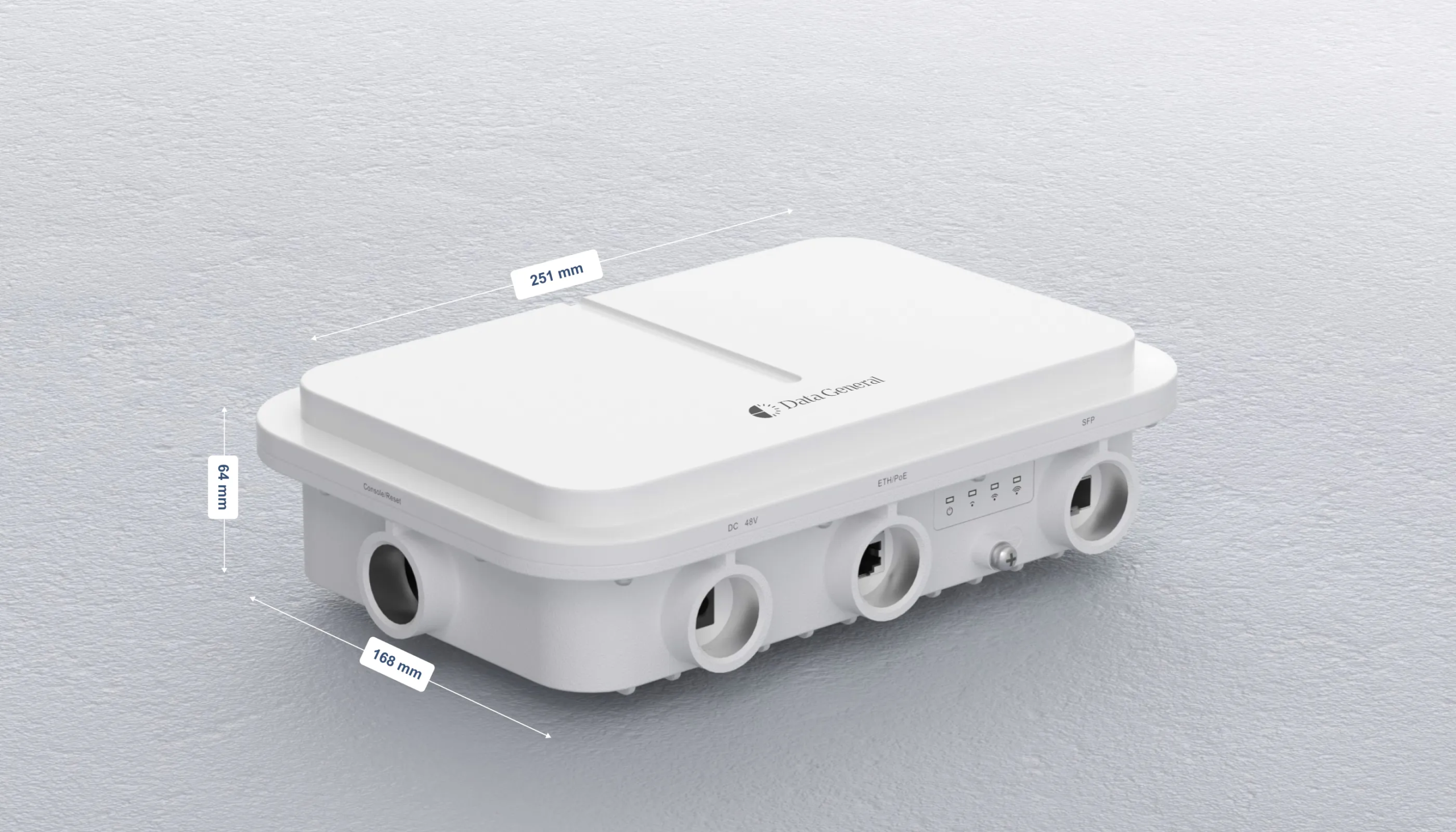
| Dimensions (W x D x H) | Main unit: 251 mm x 168 mm x 64 mm (9.88 in. x 6.61 in. x 2.52 in.) |
| Shipping: 405 mm x 232 mm x 325 mm (15.94 in. x 9.13 in. x 12.80 in.) | |
| Weight | Main unit: 1.0 kg (2.2 lbs) |
| Mounting bracket: 0.9 kg (1.98 lbs) | |
| Shipping: 3.15 kg (6.94 lbs) | |
| Mounting | Wall or Pole-mounting (a mounting bracket is delivered with the main unit) |
| Input power supply | The AP supports the following two power supply modes: |
| · 48 V DC/0.35 A power input over DC connector: The DC connector accepts the center-positive circular plug with the inner diameter of 2.0 mm (0.08 in.) or outer diameter of 6.3 mm (0.25 in.) and the length of 9.8 mm (0.39 in.). A DC power supply needs to be purchased independently. | |
| · PoE input over ETH/PoE: The power source equipment (PSE) complies with IEEE 802.3af/at standard (PoE/PoE+). | |
| Note: If both DC power and PoE are available, DC power is preferred. | |
| Power consumption | Maximum power consumption: 12.95 W |
| · DC power: 12.95 W | |
| · 802.3at (PoE+): 12.95 W | |
| · 802.3af (PoE): 12.95 W | |
| · Idle mode: 6.0 W | |
| Environment | Storage temperature: –40°C to +85°C (–40°F to +185°F) |
| Storage humidity: 0% RH to 100% RH (non-condensing) | |
Storage altitude: < 5,000 m (16,404.20 ft.) at 25°C (77°F) |
|
| Operating temperature: –40°C to +65°C (-40°F to +149°F) | |
| Operating humidity: 0% RH to 100% RH (non-condensing) | |
Operating altitude: < 5,000 m (16,404.20 ft.) at 55°C (131°F) |
|
| At an altitude between 3,000 m (9,842.52 ft.) and 5,000 m (16,404.20 ft.), every time the altitude increases by 166 m (546 ft.), the maximum temperature decreases by 1°C (1.8°F). | |
| IP Rating | IP68 |
| Mean Time Between Failure (MTBF) | 200,000 hours (22 years) at the operating temperature of 25°C (77°F) |
| System memory | 512 MB DRAM, 128 MB flash |
| Transmit power | 2.4 GHz |
| · Max. transmit power: 28 dBm (630.96 mW) | |
| · Minimum transmit power: 10 dBm (10 mW) | |
| 5 GHz | |
| · Max. transmit power: 28 dBm (630.96 mW) | |
| · Minimum transmit power: 10 dBm (10 mW) | |
| Note: The transmit power adjusted in percentage. The transmit power is limited by local regulatory requirements. | |
| Software Specifications | |
| Basic Function | |
| Applicable software version | RGOS11.9(6)W2B4 or later |
| WLAN | |
| Max. number of associated STAs | 1,024 (up to 512 STAs per radio) |
| Max. number of BSSIDs | 32 (up to 16 BSSIDs per radio) |
| Max. number of WLAN IDs | 16 |
| STA management | SSID hiding |
| Each SSID can be configured with the authentication mode, encryption mechanism, and VLAN attributes independently. | |
| Remote Intelligent Perception Technology (RIPT) | |
| Intelligent STA identification | |
| Intelligent load balancing based on the STA quantity or traffic | |
| STA limiting | SSID-based STA limiting |
| Radio-based STA limiting | |
| Bandwidth limiting | STA/SSID/AP-based rate limiting |
| CAPWAP | IPv4/IPv6 CAPWAP |
| Layer 2 and Layer 3 topology between an AP and an AC | |
| An AP can automatically discover the accessible AC. | |
| An AP can be automatically upgraded through the AC. | |
| An AP can automatically download the configuration file from the AC. | |
| CAPWAP through NAT | |
| Data forwarding | Centralized and local forwarding |
| Wireless roaming | Layer 2 and Layer 3 roaming |
| Wireless locating | MU and TAG device locating |
| Security and Authentication | |
| Authentication and encryption | Remote Authentication Dial-In User Service (RADIUS) |
| PSK and web authentication | |
| QR code-based guest authentication, SMS authentication, and MAC address bypass (MAB) authentication | |
| Data encryption: WEP (64/128 bits), WPA (TKIP), WPA-PSK, WPA2 (AES) | |
| Data frame filtering | Allowlist, static blocklist, and dynamic blocklist |
| WIDS | Rogue device discovery |
| Optimization of rogue AP containment for all STA types | |
| Fuzzy containment | |
| SSID-based blocklist | |
| DDoS attack identification | |
| Automatic detection of STA attacks, and adding STAs to the blocklist when ICMP attacks or TCP SYN attacks are detected | |
| STA isolation | |
| ACL | IP standard ACL, MAC extended ACL, IP extended ACL, and expert-level ACL |
| IPv6 ACL | |
| Time range-based ACL | |
| ACL based on a Layer 2 interface | |
| ACL based on a Layer 3 interface | |
| Ingress ACL based on a wireless interface | |
| Dynamic ACL assignment based on 802.1X authentication (used with the AC) | |
| CPP | CPU Protect Policy (CPP) |
| NFPP | Network Foundation Protection Policy (NFPP) |
| Routing and Switching | |
| MAC | Static and filtered MAC addresses |
| MAC address table size: 1,024 | |
| Max. number of static MAC addresses: 1,024 | |
| Max. number of filtered MAC addresses: 1,024 | |
| Ethernet | Jumbo frame length: 1,518 |
| Ethernet II | |
| 1000M SFP ports modules | |
| 2.5G ports | |
| VLAN | Interface-based VLAN assignment |
| Layer 2 isolation of wired interfaces (including aggregate interfaces) within VLANs | |
| Max. number of SVIs: 191 | |
| Max. number of VLANs: 4,094 | |
| VLAN ID range: 1–4,094 | |
| ARP | ARP entry aging, gratuitous ARP learning, and proxy ARP |
| Max. number of ARP entries: 1,024 | |
| Detection of IP address conflicts among downlink hosts | |
| ARP check | |
| IPv4 services | Static and DHCP-assigned IPv4 addresses |
| NAT, FTP ALG and DNS ALG | |
| IPv6 services | IPv6 addressing, Neighbor Discovery (ND), IPv6 ND proxy, ICMPv6, IPv6 ping |
| IPv6 DHCP client | |
| IP routing | IPv4/IPv6 static route |
| Max. number of static IPv4 routes: 1,024 | |
| Max. number of static IPv6 routes: 1,000 | |
| Multicast | Multicast-to-unicast conversion |
| VPN | PPPoE client |
| IPsec VPN | |
| Network Management and Monitoring | |
| Network management | NTP server and NTP client |
| SNTP client | |
| SNMPv1/v2c/v3 | |
| Fault detection and alarm | |
| Information statistics and logging | |
| Network management platform | Web management (Eweb) |
| User access management | Telnet, SSH, FTP client, FTP server, and TFTP client |
| Switchover among Fat, Fit, and cloud modes | When the AP works in Fit mode, it can be switched to Fat mode through an AC. |
| When the AP works in Fat mode, it can be switched to Fit mode through the console port or Telnet mode. | |
| When the AP works in cloud mode, it can be managed through Ruijie Cloud. | |
| Value-added Software | |
| The following value-added software functions can be achieved with the WIS solution (used with RG-iData-WIS and wireless controller). | |
| Intelligent O&M | |
| Experience | Network operation analysis, such as device stability and signal coverage |
| Measuring users’ network experience based on indicators such as the latency, packet loss, signal strength, and channel utilization, and visualizing results of the network experience | |
| Statistics on the number of online and offline failures of STAs associated with different APs, average signal strength, and other parameters | |
| VIP monitoring and alarm, and custom alarm thresholds | |
| STA global experience map and experience coverage evaluation based on the time range | |
| STA access protocol replay and fine-grained STA fault diagnosis | |
| Note: To support the preceding functions, ensure that the AP works in Fit mode. | |
| Network optimization | Network performance optimization, including one-click network optimization and scenario-based optimization |
| Client steering to cope with roaming stickiness, and experience indicator comparison | |
| Client steering to cope with remote association, and experience indicator comparison | |
| One-click diagnosis – analyzing problems and providing suggestions | |
| Big data | Baseline analysis – recording the configuration, version, and other changes, and tracking network KPI changes |
| Time capsule – analyzing the device version and configuration change history | |
| Regional analysis | Batch generation of building floor information – uploading floor plans, and dragging and dropping AP positions |
| One-click report | One-click health report – generating a report on the overall operation of a network |
| Security radar | Unauthorized Wi-Fi signal location, presentation by category, and containment |
| Cloud Management | |
| Management and maintenance | Uniformly connecting, managing, and maintaining APs, ACs, and other devices, batch device configuration and upgrade, and other functions |
| Deployment through Zero Touch Provisioning (ZTP) – creating configuration templates and automatically applying configured templates | |
| One-click discovery of the wired and wireless network topology and topology generation | |
| Cloud Authentication | |
| Authentication mode | SMS authentication, fixed account authentication, one-click authentication, Facebook authentication, Instagram authentication, voucher authentication, and other authentication modes |
| Authentication implemented in the cloud, without the need to deploy the local authentication server | |
| Customized portal | Customized Portal authentication page for mobile phones and PCs |
| SMS gateway | Interconnection with SMS gateways of GUODULINK and Alibaba Cloud |
| Platform Capabilities | |
| Big data capabilities | Mainstream persistence solutions based on Hadoop, MongoDB, and MySQL, providing distributed storage capabilities |
| Spark-based big data computing capabilities | |
| Data warehouse building based on Hive, and data model conversion, integration, and other functions | |
| Hierarchy and decentralization | Authorizing different applications for different users to meet service needs of different departments |
| Granting operation permissions to administrators in different scenarios | |
| System management | Account operation, authorization configuration, email configuration, configuration backup, exception alarms, and other system management functions |
| Note: For details, refer to the latest hybrid cloud management solution. |
FIRMWARE
DGOS11.9(6)W2B4S1_S2X2-37_10211313
DGOS11.9(6)W2B4S1_S2X2-37_10240902 (Configurable Country code)
DGOS11.9(6)W2B4S1_S2X2-37_10240713 (ES Country code)
DGOS11.9(6)W4B1S9_S2X2-37_11232016 (PPSK on DG WIS Cloud)
DATASHEETS
Secure connectivity for professional environments.
© 2026 Data General LLC. All rights reserved.
