


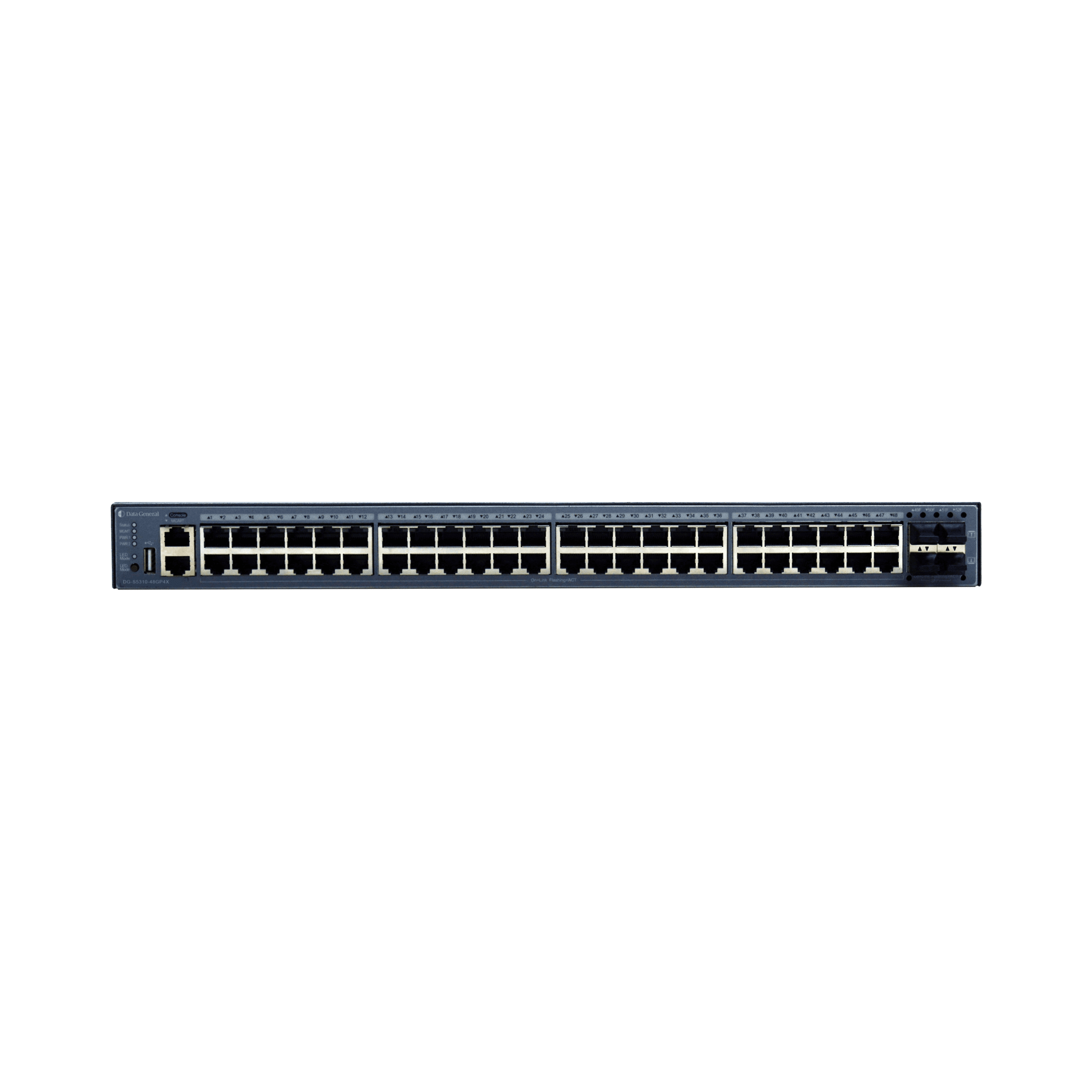
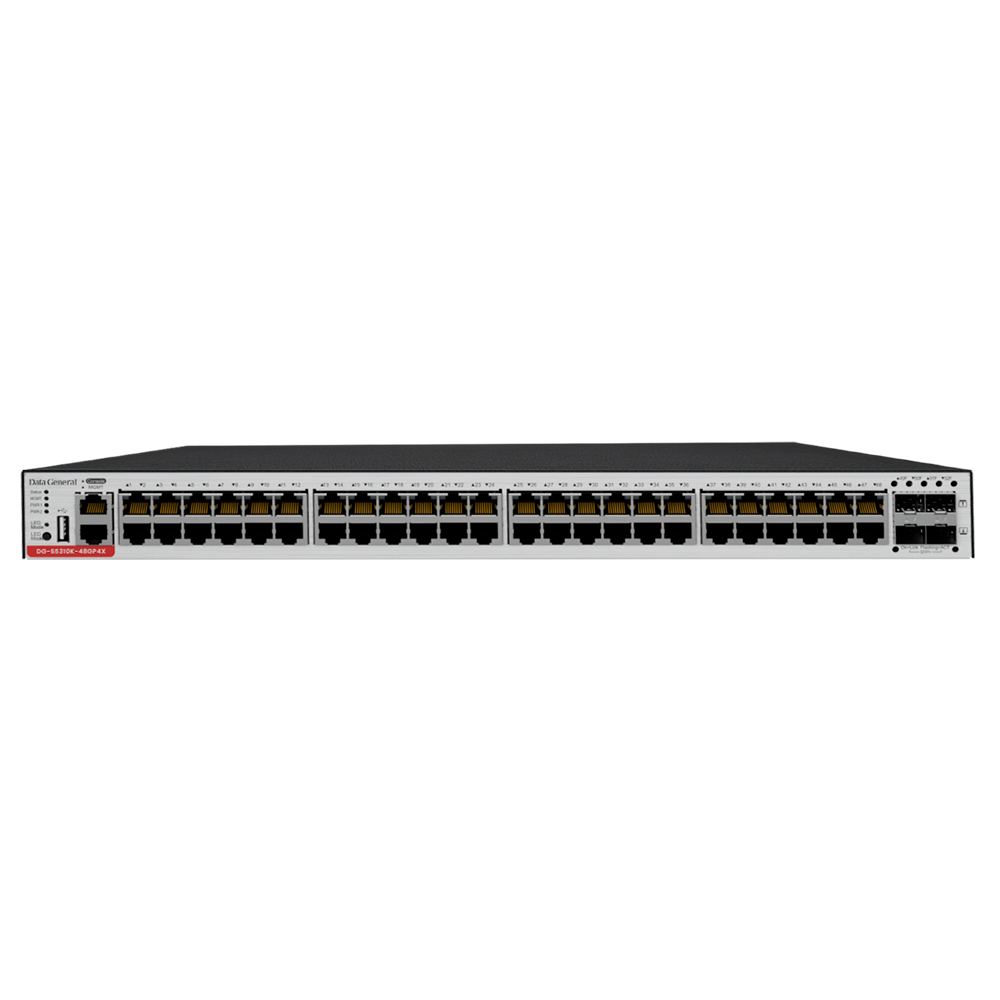


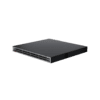
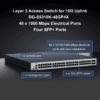
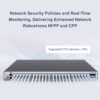
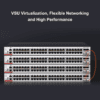
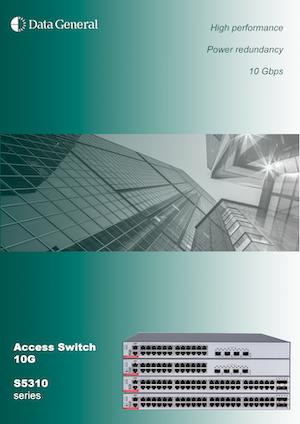
Layer 3 PoE switch with 48 Gigabit PoE ports, 4 × 10G SFP+ uplinks, and 1440 W PoE budget. Features external, hot-swappable redundant power supply; also available in a 740 W variant for regular density enterprise networks.
DG-S5310-48GP4X Layer 3 PoE Switch (1440 W) – Redundant, Hot-Swappable Power with 10G Aggregation
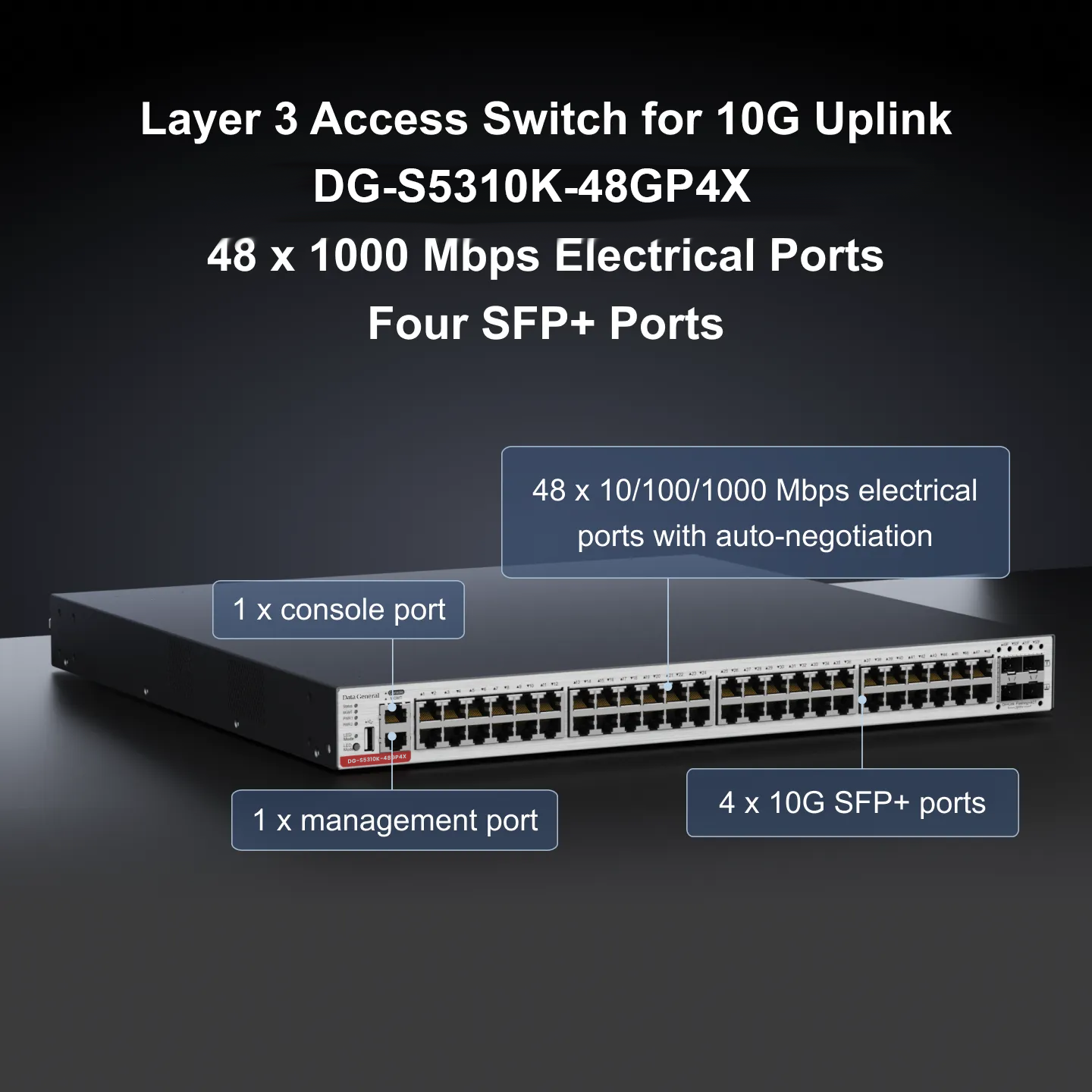
The DG-S5310-48GP4X (1440 W) is a high-capacity Layer 3 Gigabit PoE switch from Data General, engineered for enterprise deployments where power availability, scalability, and uptime are critical. It delivers 48 Gigabit Ethernet PoE ports and 4 × 10G SFP+ uplinks, providing a robust access-to-aggregation platform for modern, high-demand networks.
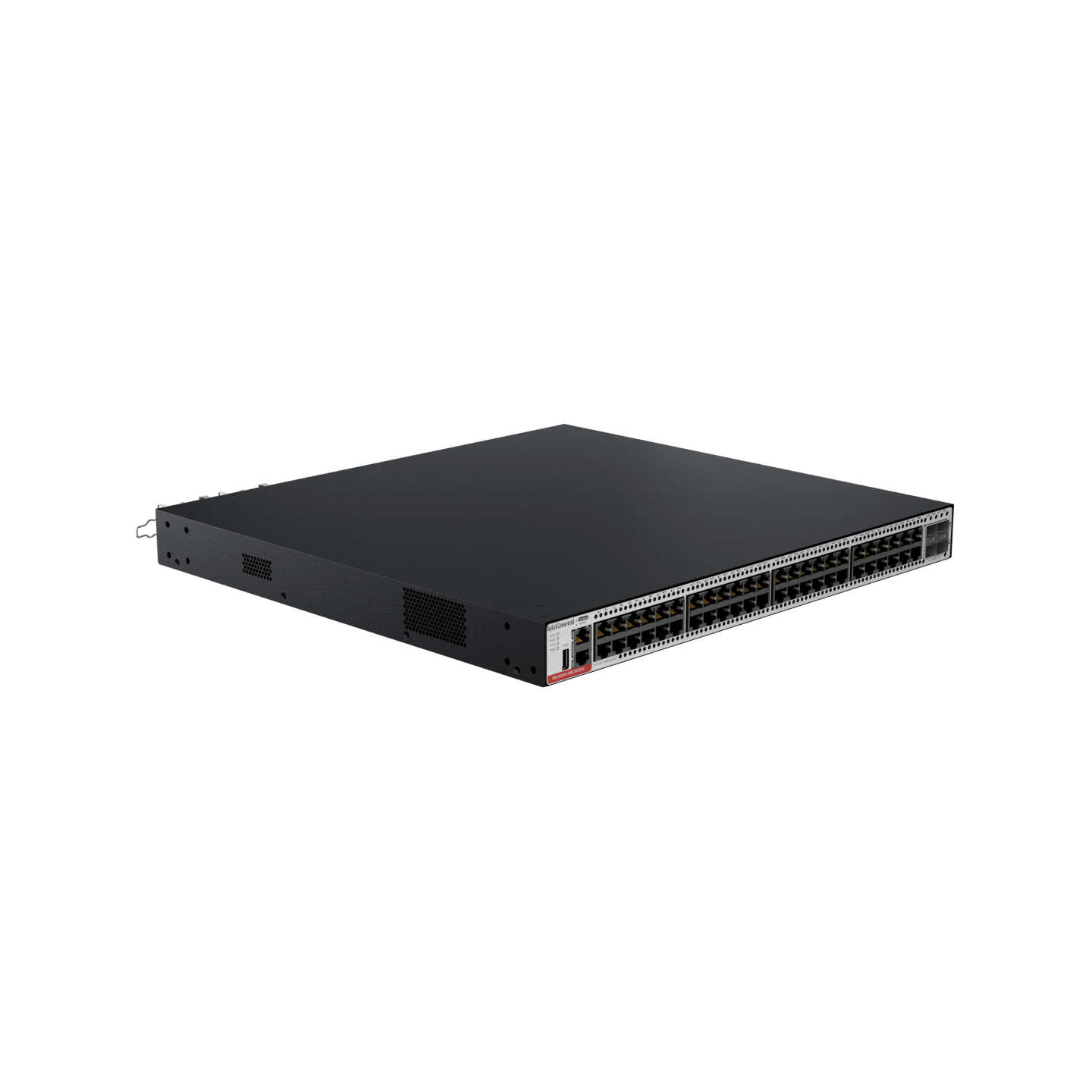
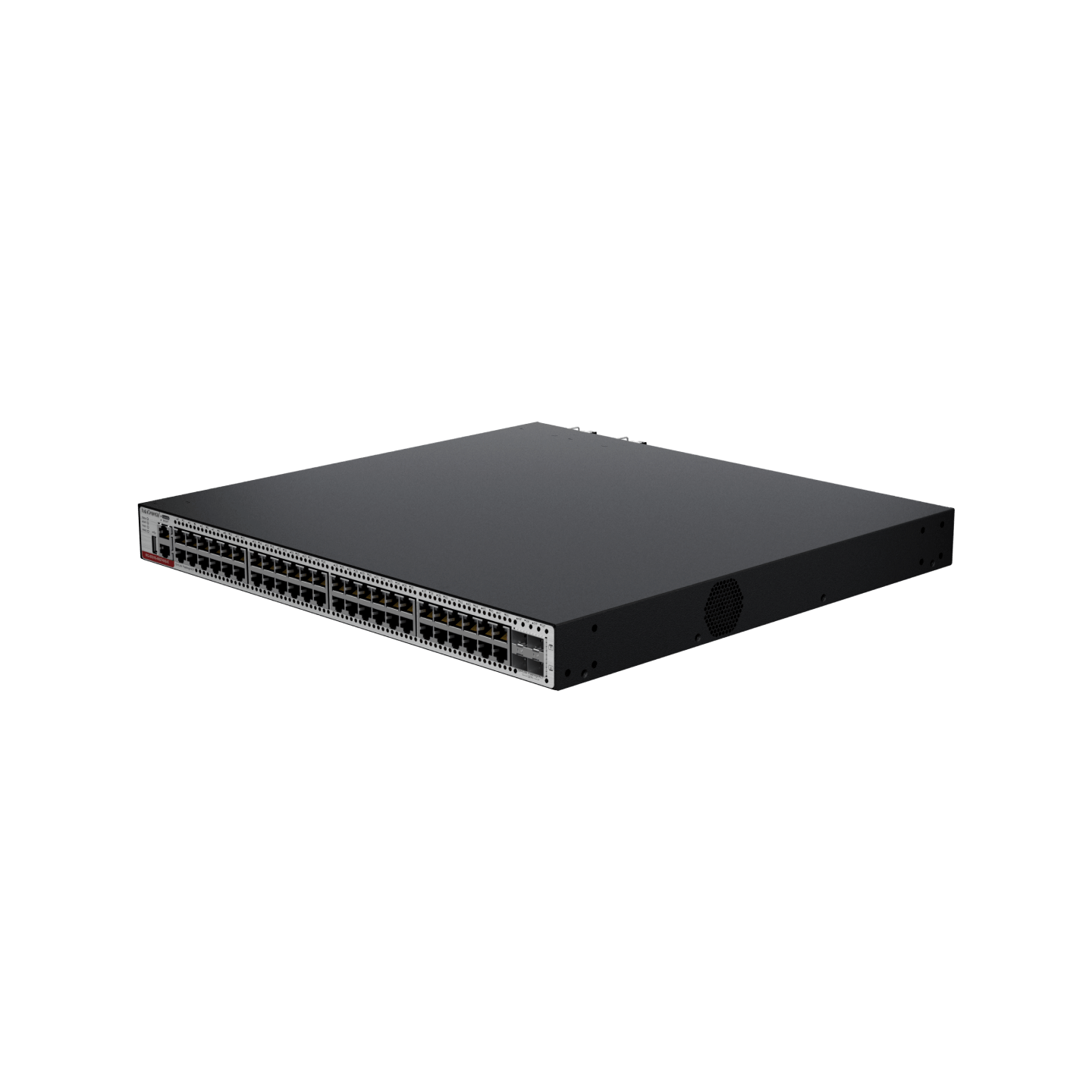
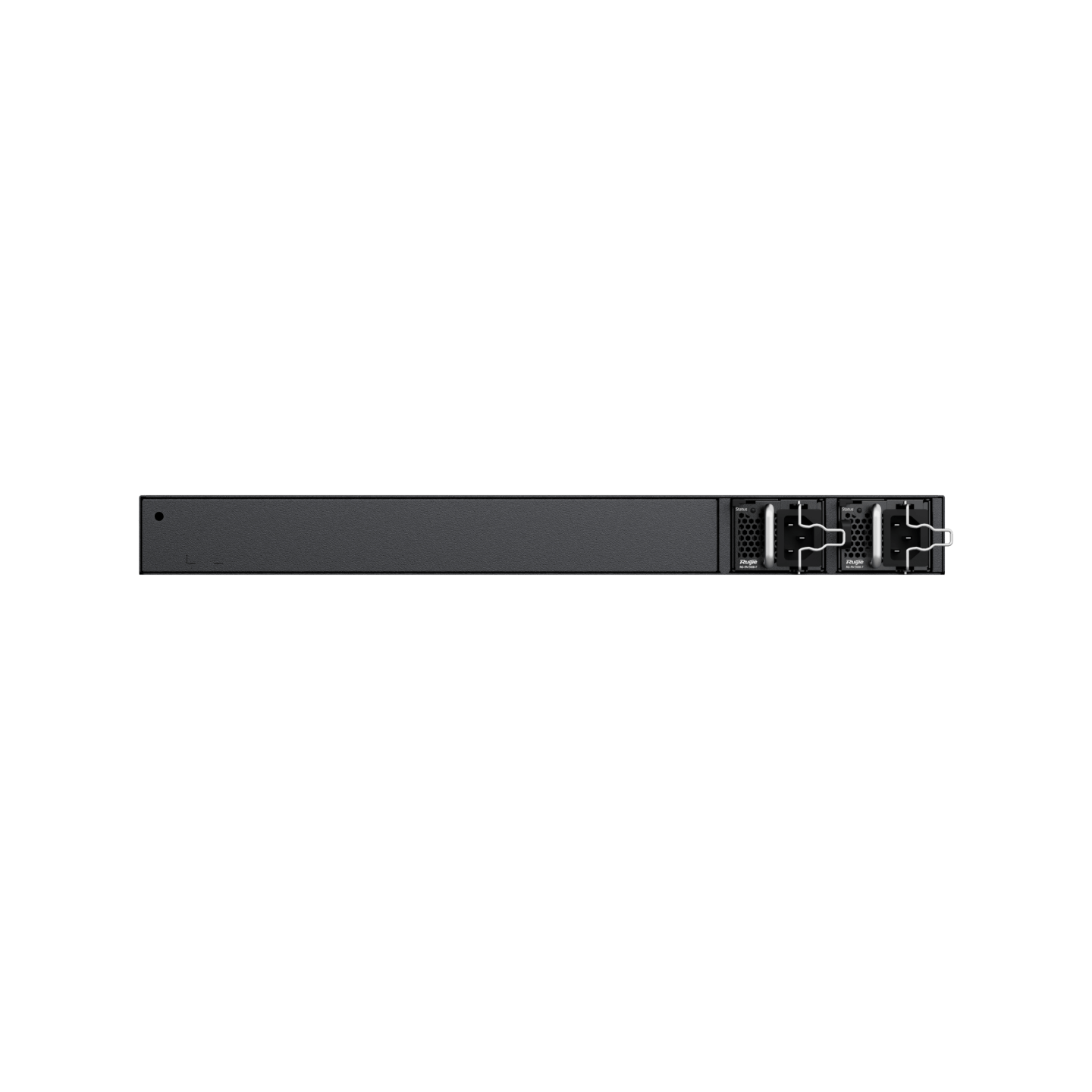
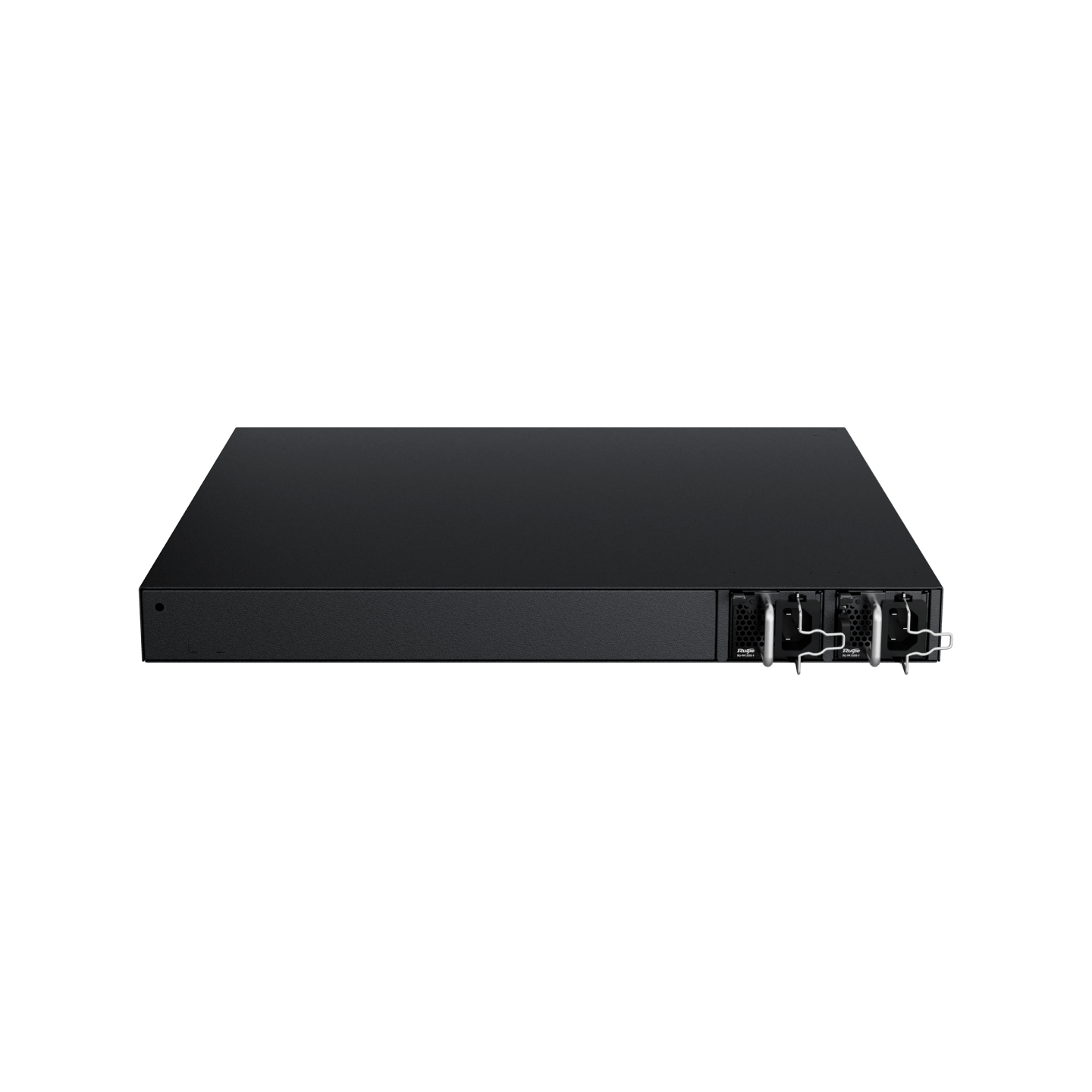
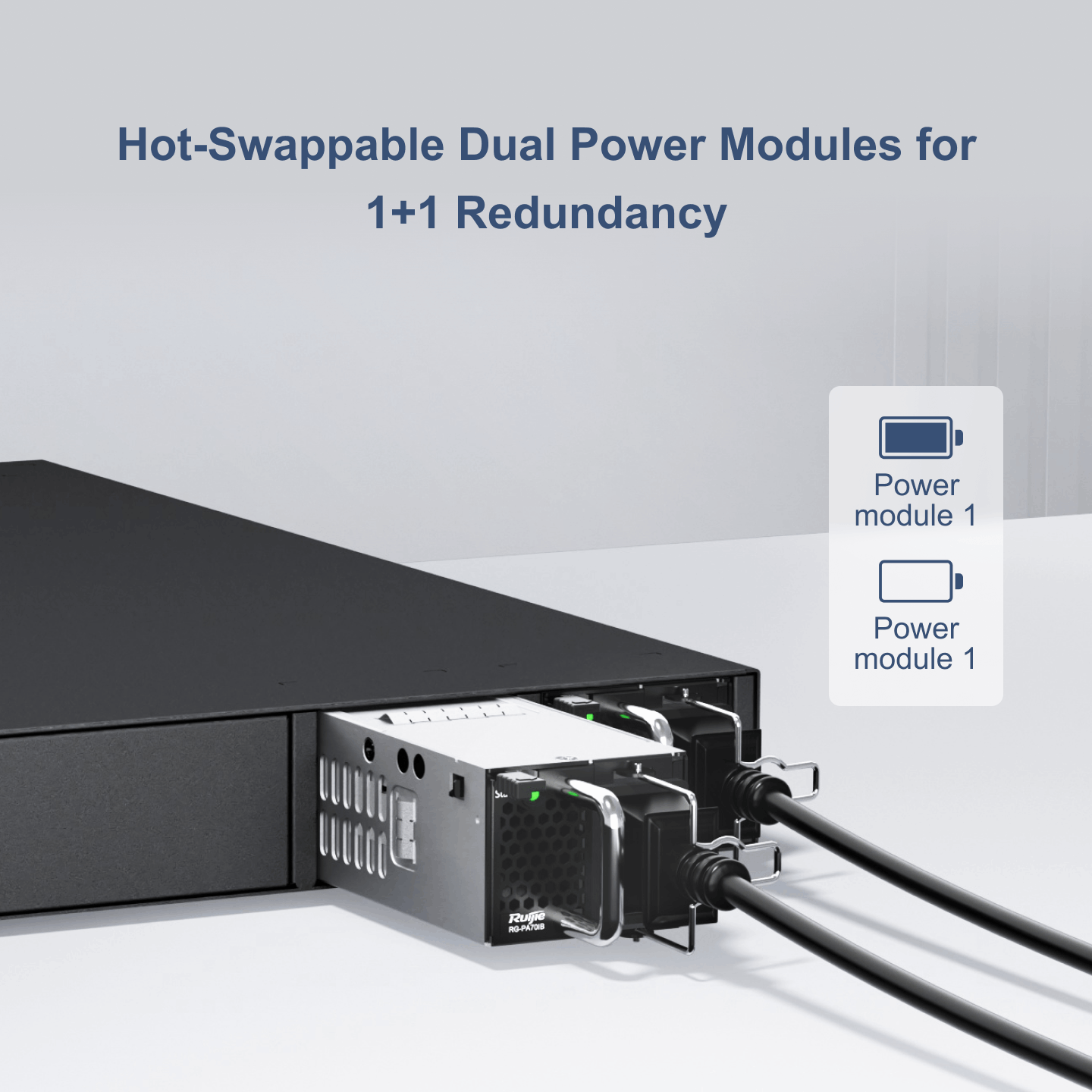
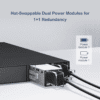
A key differentiator of this model is its external, hot-swappable and redundant power supply design. This architecture enables power redundancy and non-disruptive maintenance, ensuring continuous operation even during power module replacement or failure—an essential requirement for mission-critical environments such as hotels, hospitals, campuses, and large corporate networks.
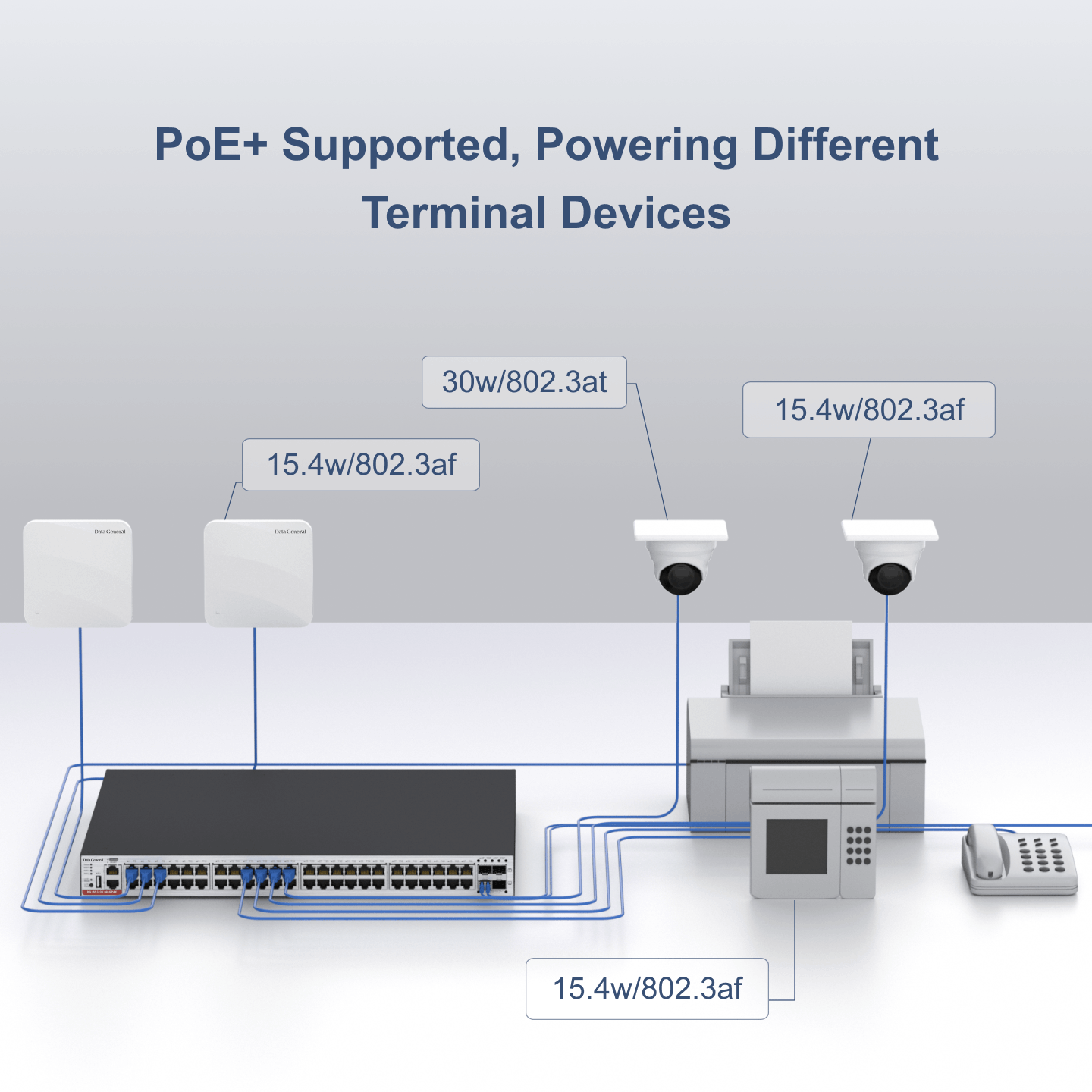
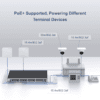
With a 1440 W PoE power budget, the switch can reliably power a wide range of edge devices, including WiFi 6 / WiFi 6E access points, IP cameras, VoIP phones, access control systems, and IoT devices, all from a single platform.
Also available: an identical 740 W PoE variant for deployments requiring less PoE density. The 1440 W version offers an optimal balance between capacity and efficiency for projects with a high demand of PoE devices.
The 4 × 10G SFP+ uplinks ensure high-throughput, low-latency connectivity to aggregation or core layers, eliminating bottlenecks in networks with heavy wireless traffic, video streaming, and data-intensive applications. Its Layer 3 functionality supports advanced routing, VLAN segmentation, and traffic management directly at the switch, improving scalability and simplifying network architecture.
Combining high-density PoE, redundant hot-swappable power supplies, Layer 3 intelligence, and 10G uplinks, the DG-S5310-48GP4X (1440 W) is a future-ready, enterprise-grade switching solution designed for reliability, performance, and growth.
Hardware Specifications |
DG-S5310-48GP4X |
|---|---|
Interface Specifications |
|
| Fixed port | 48 x 10/100/1000 BASE-T ports |
| 4 x 1G/10G SFP+ ports | |
| IEEE 802.3af and 802.3at | |
| Power module | 2 x power modules (1+1 redundancy of power modules) |
| Management port | |
System Specifications |
|
| Switching Capacity | 176 Gbps |
| Packet Forwarding Rate | 131 Mpps |
| Number of MAC addresses | 32 |
| ARP table size | 4k/16k (authorized) |
| ND table size | 2k/8k (authorized) |
| Number of IPv4 unicast routes | 8k/12k (authorized) |
| Number of IPv4 multicast routes | 2.5 |
| Number of IPv6 unicast routes | 4 |
| Number of IPv6 multicast routes | 1.2 |
| Number of ACEs | Ingress: 3,500 |
| Egress: 1,500 | |
| Number of IGMP groups | 2.5 |
| Number of MLD groups | 1 |
| Number of VSU members | 4 |
Dimensions and Weight |
|
| Dimensions (W x D x H) | 442 mm x 420 mm x 43.6 mm (17.40 in. x 16.56 in. x 1.72 in.), 1 RU |
| Weight | 4.6 kg (10.14 lbs) |
CPU and Storage |
|
| CPU | 1.2 GHz dual-core processor |
| BOOTROM | 16 MB |
| Flash | 2 GB |
| SDRAM | 1 GB |
Power and Consumption |
|
| Maximum power consumption | < 75 W (non-PoE) |
< 1,570 W (PoE full load) |
|
| Maximum output power | DG-PA600I-P-F: 600 W (PoE: 370 W) |
| DG-PD600I-P-F: 600 W (PoE: 370 W) | |
| DG-PA1000I-P-F: 176–290 V AC, 1000 W; 90–176 V AC, 930 W (PoE: 740 W) | |
| Rated input voltage | DG-PA600I-P-F: 200 V AC to 240 V AC |
| DG-PD600I-P-F: -48 V DC to -60 V DC | |
| DG-PA1000I-P-F: 200 V AC to 240V AC | |
| Maximum input voltage | DG-PA600I-P-F: 176 V AC to 264 V AC, 50 Hz to 60 Hz |
| DG-PD600I-P-F: -38V DC to -75 V DC | |
| DG-PA1000I-P-F: 176 V AC to 264 V AC, 50 Hz to 60 Hz | |
Environment and Reliability |
|
| MTBF | 35.97 years (dual power modules) |
| 22.06 years (single power module) | |
| Primary airflow | Left/Front-to-rear airflow |
| Operating temperature | 0°C to 45°C (32°F to 113°F) |
| Storage temperature | –40°C to +70°C (–40°F to +158°F) |
| Operating humidity | 10% to 90% RH (non-condensing) |
| Storage humidity | 5% to 95% RH (non-condensing) |
| Operating altitude | 0 m to 5000 m (16404.20 ft.) |
| Operating noise | < 58.3 dB |
| Interface suDGe protection | Power port: 6 kV |
| Telecom port: 10 kV (MGMT port: 4 kV) | |
Software Specifications |
|
DG-S5310-E Series |
|
Feature |
|
| Ethernet Switching | IEEE 802.1Q (supporting 4K VLANs) |
| Jumbo frame (maximum length: 9,216 bytes) | |
| Maximum number of VLANs that can be created: 4,094 | |
| Voice VLAN | |
| Super VLAN and private VLAN | |
| MAC address-based, port-based, protocol-based, and IP subnet-based VLAN assignment | |
| GVRP | |
| Basic QinQ and selective QinQ | |
| STP (IEEE 802.1.d), RSTP (IEEE 802.1w), and MSTP (IEEE 802.1s) | |
| Auto errdisable recovery | |
| BPDU filter | |
| BPDU guard | |
| Port fast | |
| Root guard | |
| ERPS (G.8032) | |
| LLDP/LLDP-MED, LLDP IPv6, and LLDP-POE | |
| IP Service | Static and dynamic ARP, ARP proxy, and ARP entry timeout |
| DHCP client, DHCP relay, DHCP server, and DHCP snooping | |
| DHCPv6 client, DHCPv6 relay, DHCPv6 server, and DHCPv6 snooping | |
| DNS client, DNS proxy, and DNSv6 client | |
| MAC address filtering | |
| Setting the MAC address aging time | |
| Neighbor Discovery (ND), ND proxy, and ND snooping | |
| GRE tunnel | |
| IP Routing | IPv4 and IPv6 static routing |
| RIP and RIPng | |
| OSPFv2, OSPFv3, and GR | |
| IS-ISv4 and IS-ISv6 | |
| BGP4 and BGP4+ | |
| IPv4/IPv6 VRF | |
| IPv4/IPv6 PBR | |
| Multicast | IGMPv1/v2/v3 |
| IGMPv1/v2 snooping | |
| IGMP fast leave | |
| PIM-DM, PIM-SM, PIM-SSM, PIM SMv6, and PIM-SSMv6 | |
| MSDP for inter-domain multicast | |
| MLDv1/v2 and MLD proxy | |
| MLDv1/v2 snooping | |
| PIM-SMv6 | |
| Multicast source IP address check | |
| Multicast source port check | |
| Multicast querier | |
| ACL and QoS | Standard IP ACLs (hardware ACLs based on IP addresses) |
| Extended IP ACLs (hardware ACLs based on IP addresses or TCP/UDP port numbers) | |
| Extended MAC ACLs (hardware ACLs based on source MAC addresses, destination MAC addresses, and optional Ethernet type) | |
| Expert-level ACLs (hardware ACLs based on flexible combinations of the VLAN ID, Ethernet type, MAC address, IP address, TCP/UDP port number, protocol type, and time range) | |
| Time based ACLS, ACL 80, and IPv6 ACL | |
| Global ACLs | |
| ACL redirection | |
| Port traffic identification | |
| Port traffic rate limiting | |
| 802.1p/DSCP/ToS traffic classification | |
| Congestion management: SP, WRR, DRR, WFQ, SP+WFQ, SP+WRR, SP+DRR, and SP+WFQ | |
| Congestion avoidance: tail drop, RED, and WRED | |
| Eight priority queues per port | |
| Rate limiting in each queue | |
| Security | Multiple AAA modes |
| RADIUS authentication and authorization | |
| RADIUS and TACACS+ | |
| IEEE802.1X authentication, MAC address bypass (MAB) authentication, and interface-based and MAC address-based 802.1X authentication | |
| Web authentication | |
| Hypertext Transfer Protocol Secure (HTTPS) | |
| SSHv1 and SSHv2 | |
| Global IP-MAC binding | |
| ICMPv6 | |
| Port security | |
| IP source guard | |
| SAVI | |
| ARP spoofing prevention | |
| CPP and NFPP | |
| Multiple attack defense functions | |
| 3-tuple binding (IP address, MAC address, and port) | |
| 3-tuple binding (IPv6 address, MAC address, and port) | |
| Filtering of invalid MAC addresses | |
| Port- and MAC address-based 802.1x authentication | |
| MAB authentication | |
| Portal authentication and Portal 2.0 authentication | |
| ARP check | |
| DAI | |
| ARP packet rate limiting | |
| Gateway ARP spoofing prevention | |
| Broadcast storm suppression | |
| Hierarchical management of administrators and password protection | |
| BPDU guard | |
| Port protection | |
| Reliability | REUP |
| RLDP | |
| RLDP, Layer 2 link connectivity detection, and unidirectional link detection | |
| DLDP | |
| IPv4 VRRP v2/v3, IPv6 VRRP, and super-VLAN for VRRP | |
| BFD, RAS, NSR, VRRR, VRRP+, and SDN loop detection | |
| Basic LACP | |
| Inter-VSU AP | |
| Link monitoring, fault notification, and remote loopback based on 802.3ah (EFM) | |
| Hot swapping of power modules | |
| Device virtualization | VSU |
| Local and remote stacking | |
| Inter-chassis link binding in a stack | |
| Virtualization through standard service interfaces | |
| NMS and maintenance | RSPAN and ERSPAN |
| sFlow | |
| NTP client, NTP server, NTPv6 client, and NTPv6 server | |
| SNTP | |
| CLI (Telnet/Console) | |
| FTP client, FTP server, FTPv6 client, and FTPv6 server | |
| TFTP client, TFTP server, TFTPv6 client, and TFTPv6 server | |
| FTP and TFTP | |
| SNMP v1/v2/c3 | |
| Web | |
| Syslog/Debug | |
| RMON (1, 2, 3, 9) | |
| Various types of RMON groups, including event groups, alarm groups, history groups, and statistics groups, as well as private alarm extension groups | |
| RMON used to implement Ethernet statistics, historical statistics, and alarm functions | |
| NETCONF | |
| MACC | |
| CWMP | |
| gRPC | |
| OpenFlow Special 1.3 | |
| Flow table analysis defined by all protocols | |
| Transmission of specified packets to the controller | |
| Configuring the controller’s IP address and port | |
| Notifying port status changes to the controller | |
| RNS, configuration rollback, and 802.3ah | |
| 1:1 mirroring | |
| N:1 mirroring | |
| 1:N mirroring | |
| Flow-based local and remote mirroring | |
| VXLAN | VXLAN (authorized) |
| PoE | DG-S5310-24GP4X and DG-S5310-48GP4X: |
| IEEE 802.3af and 802.3at power supply standards | |
| Automatic and eneDGy-saving power supply management modes | |
| Uninterrupted power supply in hot start mode | |
| Scheduled power-on or power-off of PoE ports based on the time policy | |
| Port priority |
FIRMWARE
DATASHEETS

Secure connectivity for professional environments.
© 2026 Data General LLC. All rights reserved.
